Piping stress and flexibility analysis
Piping that heats up, carries weight and connects to pumps, vessels and compressors must be flexible enough to expand without overstressing itself or the equipment. The analysis checks stresses, support loads and nozzle loads for every load case the line will see.
When you need it
- A new line, a modification or a tie-in needs formal stress analysis before it is issued for construction.
- Design temperature or pressure changes, or an existing line is being re-rated.
- Equipment vendors report nozzle loads above their allowables.
- A support has failed, a line is moving more than expected, or a flange keeps leaking.
What the analysis covers
- Sustained, expansion and occasional load cases: weight, pressure, thermal range, wind, earthquake and relief thrust.
- Flexibility at bends, tees and branch connections, with stress intensification factors from ASME B31J where agreed.
- Support loads and displacements, including friction and gaps at guides and line stops.
- Nozzle loads on pumps, compressors, vessels and tanks against vendor or standard allowables.
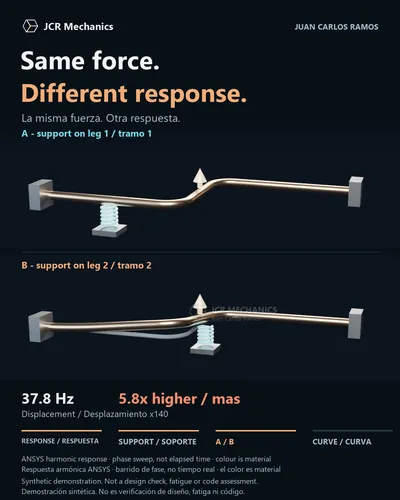
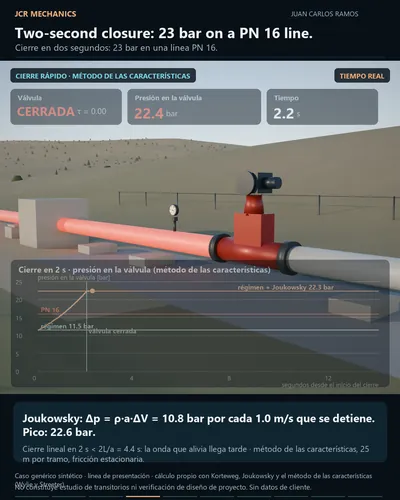
- Dynamic cases where they matter: modal analysis, slug, surge forces and seismic response.
What we need from you
- Isometrics or a 3D model export, with the line list and design conditions.
- Pipe class specifications: materials, wall thicknesses and fittings.
- Equipment drawings with nozzle positions, thermal movements and allowable loads.
- Support standard and the location and type of existing supports.
- Occasional load data: wind, seismic, relief valve and surge loads if applicable.
What you receive
- A report with assumptions, method, verification against hand calculation for key legs, and code margins for each load case.
- Support load and displacement tables for the structural and civil disciplines.
- The model files and a results review call.
- Recommended support and routing changes where the system does not pass.
Codes and standards
- ASME B31.3
- ASME B31.4
- ASME B31.8
- ASME B31J
The assessment is framed against the edition your project specifies.
Related cases
Generic, synthetic studies from the portfolio that show this kind of analysis at work.
Questions clients ask
Which lines need formal stress analysis?
That is set by the project's stress criticality criteria, which combine size, temperature, pressure, connected equipment and cyclic service. ASME B31.3 does not require a formal analysis for a line that duplicates a proven system or can readily be judged adequate by comparison. Lines on rotating equipment or in high temperature or cyclic service are normally analysed in full.
What is the difference between sustained, expansion and occasional stresses?
Sustained stresses from weight and pressure act all the time and can cause gross deformation, so they are limited against the allowable at temperature. Expansion stress is self-limiting and is checked as a range against an allowable that reflects shakedown and fatigue. Occasional loads act briefly and are checked against a higher allowable.
Does using ASME B31J change the results?
It can. ASME B31J gives stress intensification and flexibility factors for fittings from a consistent basis, and these can raise or lower the stress at tees and branches. Whether it applies depends on the code edition the project follows and the client's specification.
Contact
Have a case like this?
Send the question and the data you can share. You will get back a proposed scope, method and timeline.
Confidential by default: project data is never used in public material.